News Flash
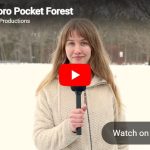
The Blue Reporters, the Attleboro High School media team, have produced a video explaining why a pocket forest is important and promoting an event at the Attleboro Area Industrial Museum.
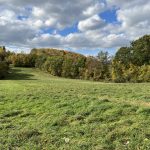
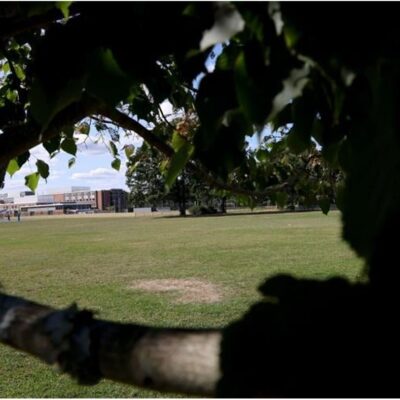
Attleboro is taking steps to mitigate flooding, reduce stormwater damage, and increase drought resilience by creating a pocket forest with deepening soils that absorb and hold water —about 10 times that of a stand of a single tree species. Plans are for volunteers in the spring to plant 500 native trees and shrubs of thirty-five different species in a 2,000-square-foot circular plot on the diamond in the former O’Connell baseball field, located near the Capron Park Zoo. Students attending the nearby Attleboro High School will assist with the April planting and monitoring of the pocket forest. Volunteers are also welcome.
Volunteer Sign Up.
Attleboro addresses climate change by slowing down water flow, increasing infiltration into the ground to boost plant photosynthesis, supporting more soil life with added moisture, recharging streams, restoring land, and preventing wildfires.

Ocean River Institute summer interns, concerned about the plight of right whales suffering from stormwater pollution and water warmed by urban surfaces, approached Attleboro to create a pocket forest that would have much more soil and hold significantly more water than a stand of trees. They were welcomed by Attleboro with bigger plans than they imagined, beginning with a pilot pocket forest and future plans for larger ones.
Video: How a Pocket Forest in Attleboro Saves Right Whales
Make a donation to buy a tree for Attleboro’s pocket forest.
Akira Miyawaki observed that trees near temples are more lush because of the greater species diversity there than in forests. He also noted that it takes about 100 years for a field to develop into a mature forest. A Miyawaki forest is a dense planting of approximately 52 different woody plant species at various stages of succession, including sumacs, cedars, old-growth oaks, maples, and beeches. The roots of these plants intertwine into fungal strands, forming a single mycorrhizal network. Bacteria along and at the ends of these networks prepare plant nutrients and minerals. Spread across the wood-wide web, whatever one plant cell requests is accessible to all other plants on the network. As a result, a Miyawaki forest shows ten times the growth, ten times the soil depth, and greater water-holding capacity compared to a stand of a single tree species. Moist soil reduces stormwater damage, nourishes plants, and helps recharge rivers during the dry summer months.

Image: ORI Summer interns at the Miyawaki Forest in Denehy Park, Cambridge, 2024.
Attleboro benefits significantly from pocket forests. Trees grow quickly and reach full maturity in 20 to 30 years. The pocket forest enhances biodiversity by supporting a greater variety of wildlife, including migrating birds. Vegetation filters pollutants, improving air quality. Deep soils hold more water; four inches of soil can retain seven inches of rainwater thanks to sticky carbohydrates that keep mineral particles spaced. The pocket forest provides cooling. Overall, the community space has improved in visual appeal and now offers more wildlife and recreational opportunities.

Image: Aerial view photograph of O’Connell Field, Attleboro. The red circle indicates the location of the first pocket forest.
The plans involve creating a small pocket forest of about 2,050 square feet in O’Connell Field, visible from the entrance to Capron Park Zoo. The plants are spaced only eighteen inches apart, allowing the tall, vigorous woody species to compete for sunlight. To minimize trampling of the prepared soil, volunteers will form teams of eight to plant native woody plants for a half-hour period, preceded by a fifteen-minute training session.
Purchasing 52 different tree and shrub varieties in sufficient quantities, as well as preparing the soil, will incur costs. A foundation has challenged us to match small donors’ dollar-for-dollar to purchase trees. Funds raised by the Ocean River Institute will go to the designated Attleboro town fund. Businesses are encouraged to make direct donations to the Attleboro Pocket Forest fund. Funds unspent will be held for Attleboro’s next pocket forest. O’Connell Field has space to plant five pocket forests, one a year.
Volunteer to dig in planting a forest or to help monitor, measure growth, and weed.

What happens in Attleboro does not stay in Attleboro; it harms or benefits everyone.
Please support Attleboro residents’ efforts to plant a pocket forest featuring a diverse array of native woody plants. This will become the first Miyawaki forest planted to slow down stormwater and rehydrate the land by retaining more water in the ground.
Annual rainfall has not changed. Unfortunately, we have removed so much vegetation and soil, replacing them with hardscape and heat islands, that now stormwater, flooding, and droughts ravage the land and contribute to rising sea levels and more extreme weather events.
Rehydrating the land adds moisture to healthy soils, which sustains life, fosters more plant growth, benefits pollinators and wildlife, maintains river flow during dry periods, reduces the transport of heat from stormwater runoff to warm the ocean, and cools the climate.
Donate in support of Attleboro’s Pocket Forest.

Attleboro Pocket Forest tee, sweatshirts, and hoodies
We’re planting a Miyawaki Forest for flood mitigation and drought resilience, to rehydrate the Earth, and reduce water vapor in the atmosphere, that in turn reduces the frequency of extreme weather events.
Together, acting from the ground up, we can do much to restore our quality of life.