When heavy rain hits Alewife Brook, combined sewer overflows (CSOs) can send sewage-contaminated water into the brook, onto public trails, and into surrounding habitat. For the thousands of people living in the Alewife floodplain, combined sewer overflows are not an abstract infrastructure problem.
Six outlets discharged a combined 2.5 million gallons of sewage-contaminated overflow in just 45 minutes during an October 2021 storm that brought nearly an inch of rain.
The conventional engineering response is to capture and store that water until it can be treated. A proposed and much-needed 3-million-gallon storage pipe is now part of the public discussion.
But living systems invite another question: Can we also slow some of this water, clean it, and return it to the landscape?
Belmont has already shown what residents can accomplish with one important piece of that idea.
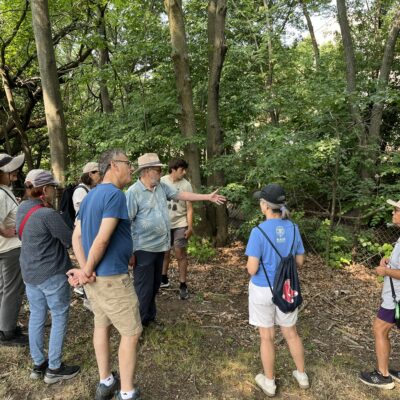
Nearly 275 Belmont residents helped to plant 1,144 native trees and shrubs representing 32 species in just 3,000 square feet beside Belmont High School. Created using principles of the Miyawaki method of dense native planting, the young forest has become a living laboratory for students, artists, arborists, birders, and environmental educators exploring biodiversity and climate change.
Now imagine applying that community experience to a larger environmental challenge just downstream.
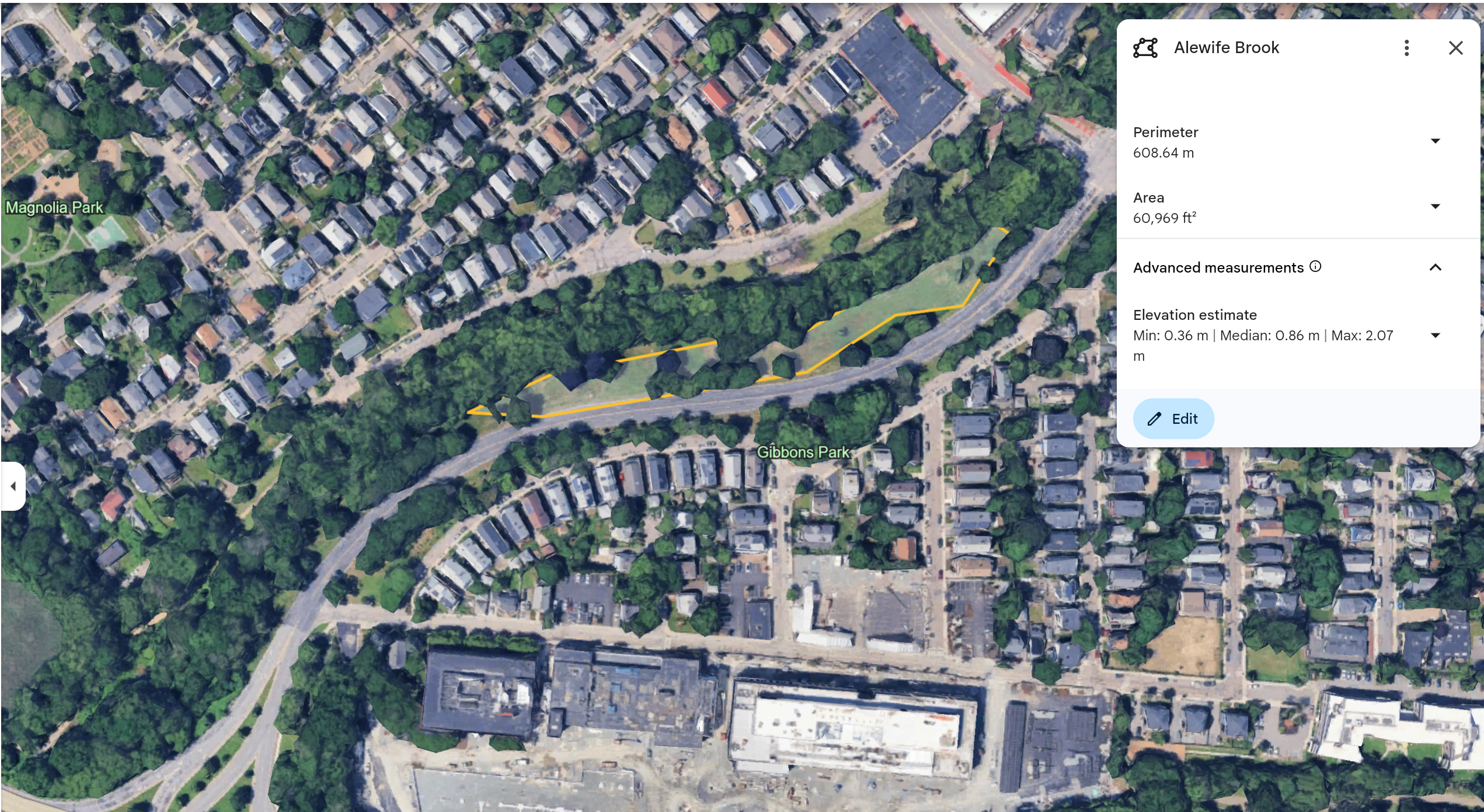
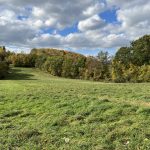
Caption: The open areas between Alewife Brook Parkway and the wooded brook corridor total roughly 60,000 square feet.
The roughly 60,000 square feet of mowed grass between Alewife Brook Parkway and the brook could potentially support about 25,000 native trees and shrubs representing a rich diversity of species, many of which are valuable to pollinators.
More than a forest, this would be an experiment in living infrastructure.
The underlying concept is not exotic: a forested leach field. The innovation would be combining subsurface wastewater treatment with a densely planted native forest designed to provide habitat and other ecological benefits.
Instead of sending all combined sewer overflow down the brook, a pilot system could divert a portion of it for treatment. After screening to remove sediment and floating debris, the water could be pumped to the upland, where it could pass through engineered biological filters—potentially including wood chips colonized by fungi and beneficial microbes and biochar designed to adsorb contaminants.
The water could then be distributed underground through a carefully engineered infiltration system beneath the forest. Similar to a conventional leach field, the soil itself would provide further treatment, but here the treatment zone would also support thousands of native trees and shrubs.
As water moves through the soil, plant roots, fungi, bacteria, and other soil organisms could provide additional biological processing. Trees would return some water to the atmosphere through transpiration. Their roots and accumulated organic matter could improve soil structure and infiltration capacity while creating more biomass above and below ground.
This pilot project is not intended to replace modern wastewater treatment or the conventional infrastructure required to manage combined sewer overflows. It proposes investigating whether living systems can complement and enhance conventional infrastructure.
If successful, the benefits could extend well beyond water quality. A native forest could provide habitat for birds and pollinators, cool its surroundings, capture carbon, filter air pollution, soften traffic noise from Alewife Brook Parkway, and make the Alewife Greenway more beautiful and welcoming.
Cities across the country are searching for affordable, nature-based ways to manage stormwater in a changing climate. Alewife Brook offers an extraordinary place to test what happens when ecological restoration and conventional engineering are designed together rather than treated as separate worlds.
And Belmont has already helped to plant the seed.
How You Can Help
The current public-comment process is an opportunity to ask Cambridge, Somerville, and the MWRA to evaluate a living forest infrastructure pilot alongside conventional solutions.
Belmont residents have already experienced what it means to create a dense, diverse native forest together and shown what a community can accomplish with 3,000 square feet and 1,144 native trees and shrubs. Tree lovers, birders, gardeners, botanists, students, educators, and others can explain why native forest deserves a place in the discussion—not only for managing water, but for habitat, cooling, cleaner air, beauty, and the health of the Alewife Greenway.
Perhaps the next forest can do something even bigger by helping to keep sewage-contaminated water out of Alewife Brook while making its greenway cleaner, healthier, and more resilient. Planting thousands of native saplings is an investment, not just in today’s infrastructure, but in a forest that could grow and mature for generations.