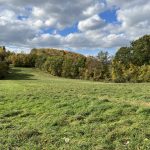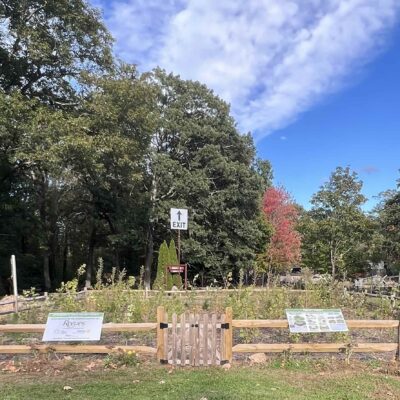
Attleboro High School students welcome you to Attleboro’s first pocket forest. We are planting pocket forests with a high density and diversity of native tree and shrub saplings to increase vegetation and deepen soils so they can hold more water. When rains came in September 2023, Attleboro and Leominster suffered more stormwater and flood damage than any other Massachusetts city. About 150 people came out to plant this pocket forest in the old baseball field as an educational pilot to prepare Attleboro to steward larger pocket forests.
Every visit is a new observation. What you see today may be different from what someone saw last week.
Begin outside the split-rail fence, where four observation activities invite you to meet the trees and shrubs. Start at any fence and complete as many activities as you like.
Each fence has its own sign and QR code. Scan the code at the fence where you are standing to open its observation form. You can also use the matching button below. Check the fence name at the top before you begin. After you submit your observations, you will return to this page to choose another fence.
Please make your observations from outside the fence. If you enter the forest through the gate, stay on the designated path and close the gate behind you to help keep rabbits, woodchucks, and other plant-eating visitors out.
Use the plant identification signs to help you. You do not need to identify every plant to contribute. If you are unsure, indicate that on the form. Describe what you see today; leaves, flowers, and berries change with the seasons.
West Fence
Look for the gate and the identification signs. Some of the tallest trees here are cottonwoods, with broad leaves when they are in leaf.
- How many cottonwoods can you count in the West Fence observation area?
- Look for willows with long, narrow leaves. How many can you see?
- How many sweet pepperbush shrubs can you find near this fence?
Button: Record West Fence observations
North Fence
From outside the West Fence gate, facing the pocket forest, turn left and walk around the corner to the North Fence. Look for the tall larches. Larches are deciduous conifers: their needles drop in autumn and regrow in spring.
- How many larches can you count in the North Fence observation area, about half of the pocket forest?
- Can you find the tall river birch? What helped you recognize it?
- Look for a small red maple near the fence. Does it appear to be the smallest tree in this observation area?
Button: Record North Fence observations
East Fence
Look for the pines on the side pocket forest opposite the gate.
- How many pines can you count in the East Fence observation area?
- Do the pines all look alike? What differences do you notice that may indicate different pine tree species?
- How many sheep laurel shrubs can you find?
Button: Record East Fence observations
South Fence
Look for the Reeves family bench in front of this fence. The Reeves Name Badge Company has generously supported and helped care for the pocket forest.
- Alders with broadly oval shaped leaves are doing well here. How many can you count near the fence?
- Can you find a bayberry shrub? When leaves are present, look for their leathery texture.
- Can you find a tulip tree? What helped you recognize it?
- Can you find a holly with glossy green leaves and spiny edges? Do you see any berries today?
The forest was planted with eight female hollies and two male hollies of the cultivar ‘Jersey Knight.’ Female hollies have red berries; male hollies have white flowers, only.
Button: Record South Fence observations
Come back and see what changes
Thank you for taking the time to meet the trees and shrubs. Come back in another season or next year to see what has changed. Your observations and discoveries will help us learn how this pocket forest grows, develops deeper soils, and may help Attleboro hold more water in the landscape, reducing damage from flooding and drought.