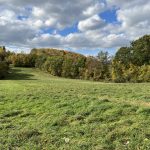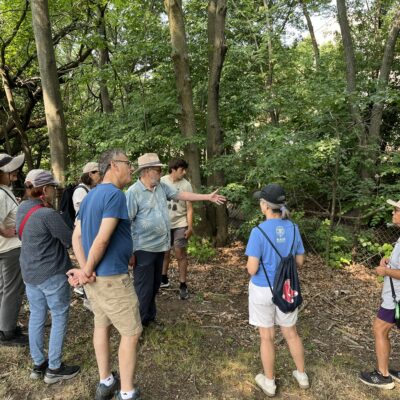
The Boston Mycological Club encourages Cambridge, Somerville, and MWRA to pilot living infrastructure to complement traditional engineered infrastructure. This is not an either/or proposition. Industrial infrastructure and living infrastructure perform different but complementary functions and are most effective when designed to work in concert.
Pipes, pumps, tunnels, and treatment plants convey and treat water after it enters the sewer system. Living forests, healthy soils, and the mycorrhizal networks that sustain them slow, absorb, store, and gradually release rainfall before it becomes stormwater runoff. Together, these forms of infrastructure can reduce pressure on combined sewer systems while improving water quality, ecosystem health, and climate resilience.
Mycorrhizal fungi are a foundational component of healthy forest soils. By supporting the underground networks that enhance soil structure, water infiltration, and nutrient cycling, they contribute to the natural hydrologic functions cities increasingly need as storms become more intense. We encourage pilot projects that evaluate living infrastructure alongside conventional engineering solutions, recognizing that resilient watersheds depend on industrial and ecological systems working in concert.
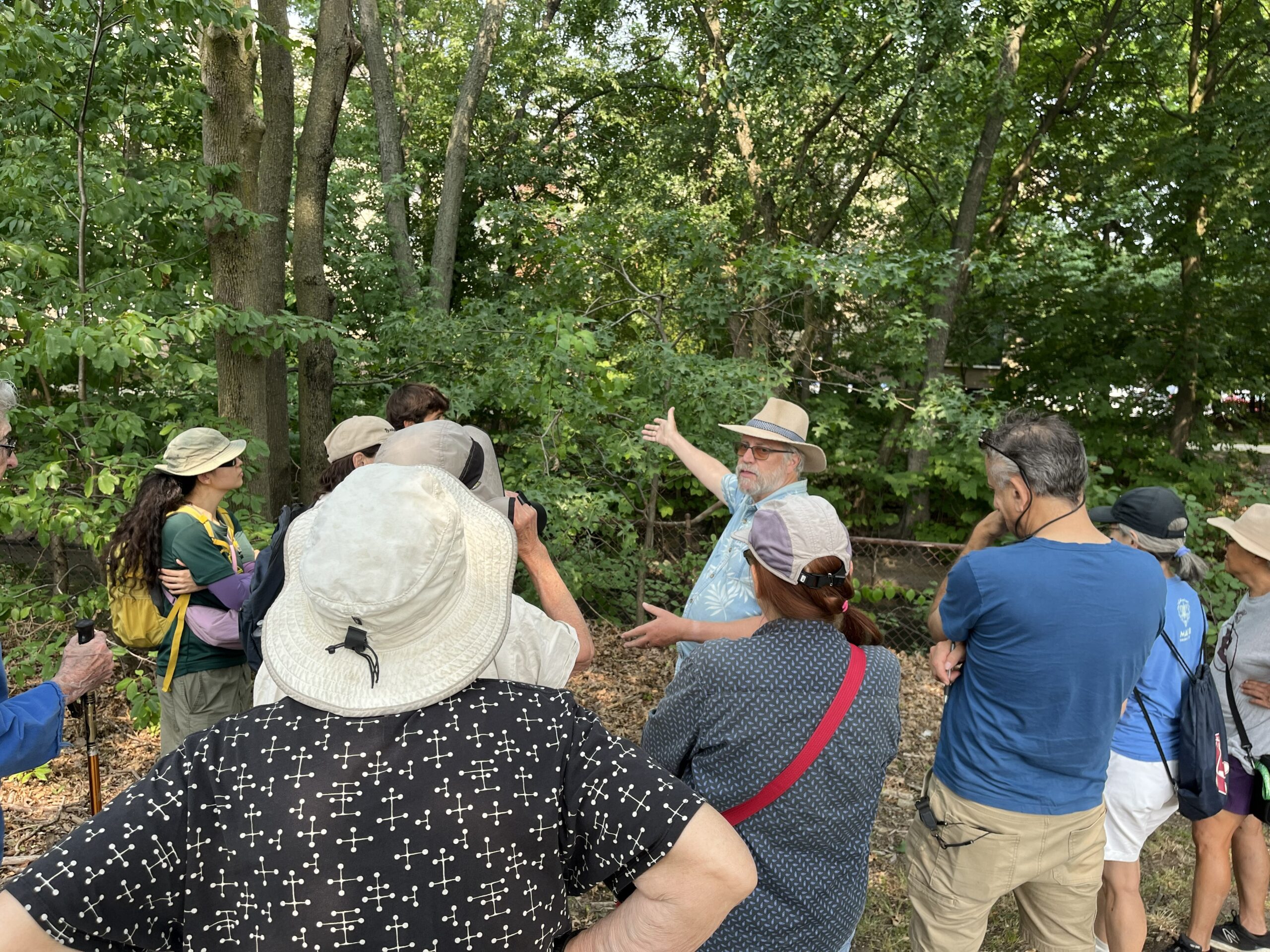
Boston Mycological Club members explore the Alewife corridor and discuss the role of fungi, forest soils, and mycorrhizal networks in living infrastructure.
The Alewife Living Forest would test that complementarity one step further. ORI proposes evaluating whether a portion of CSO water could be pretreated, lifted and regulated before being distributed underground through a forested leach field. The pilot would measure what the system can safely receive and treat, while thousands of native trees and shrubs establish a living forest above it.